 During his reign of terror in the late '60s and early '70s, the Zodiac killer attacked three couples in Northern California, killing one man, severely wounding two, and murdering all three women. He also shot and killed a San Francisco cabbie. In total, five people dead. He may have killed more, though the facts aren't clear. But the fascination of the Zodiac killer is not based on body count. It's based on terror. Like Jack the Ripper and the Son of Sam, the Zodiac sent letters and taunted the police. He captured the public's imagination. He made threats about bombs and killing children on a school bus. He also falsely claimed murders he did not commit, perhaps in an effort to confuse authorities or to build up his image and gather more attention. He liked being a media star. He mailed cryptograms peppered with cultural references and purposeful misspellings (only one of the ciphers, the first, was broken). He designed a costume. He changed murder weapons and patterns. He was a thrill killer. A sexual sadist. A keen manipulator. He had intelligence. He was a planner. A game player. And he was never caught. Other infamous serial killers (BTK and the Green River Killer come to mind) lost their horrific auras when the sad, twisted, bland men behind those monikers came into the light. They'd gotten lucky in pursuing their compulsive dark blood fantasies, they evaded the cops, then their luck changed and some combination of DNA and egotism betrayed them and they were caught. Not so with Zodiac. Robert Graysmith makes a compelling argument that Arthur Leigh Allen was Zodiac. The circumstantial evidence against Allen is staggering. But DNA, fingerprints, and handwriting excluded Allen, though the validity of the DNA, fingerprints, and handwriting analysis used to exclude is also debatable. Graysmith's first book, Zodiac, is an excellent study of the case. This Is the Zodiac Speaking: Into the Mind of A Serial Killer by Michael D. Kelleher and David Van Nuys is worth reading as well. Zodiac inspired the movie villain Scorpio in Dirty Harry. David Fincher's beautiful and entertaining film, Zodiac, follows Graysmith's growing obsession with the case and the toll it took on those whose lives were entwined with the crimes. Tom Voigt's website Zodiackiller.com is a treasure trove of information, though Voigt's strong opinions and personality may rub some people the wrong way. Like his predecessor, Jack the Ripper, Zodiac has become a cultural icon. We know the shadow and not the man, the crimes but not the identity of the criminal. He killed and he vanished. He scares us because he is an enigma, an avatar of evil. He was smart, cruel, and powerful. He did what he wanted to do and he got away with it. No closure. We don't have him, so he has us. I suspect he always will.
Monday, February 28, 2011
This is the Zodiac speaking . . .
During his reign of terror in the late '60s and early '70s, the Zodiac killer attacked three couples in Northern California, killing one man, severely wounding two, and murdering all three women. He also shot and killed a San Francisco cabbie. In total, five people dead. He may have killed more, though the facts aren't clear. But the fascination of the Zodiac killer is not based on body count. It's based on terror. Like Jack the Ripper and the Son of Sam, the Zodiac sent letters and taunted the police. He captured the public's imagination. He made threats about bombs and killing children on a school bus. He also falsely claimed murders he did not commit, perhaps in an effort to confuse authorities or to build up his image and gather more attention. He liked being a media star. He mailed cryptograms peppered with cultural references and purposeful misspellings (only one of the ciphers, the first, was broken). He designed a costume. He changed murder weapons and patterns. He was a thrill killer. A sexual sadist. A keen manipulator. He had intelligence. He was a planner. A game player. And he was never caught. Other infamous serial killers (BTK and the Green River Killer come to mind) lost their horrific auras when the sad, twisted, bland men behind those monikers came into the light. They'd gotten lucky in pursuing their compulsive dark blood fantasies, they evaded the cops, then their luck changed and some combination of DNA and egotism betrayed them and they were caught. Not so with Zodiac. Robert Graysmith makes a compelling argument that Arthur Leigh Allen was Zodiac. The circumstantial evidence against Allen is staggering. But DNA, fingerprints, and handwriting excluded Allen, though the validity of the DNA, fingerprints, and handwriting analysis used to exclude is also debatable. Graysmith's first book, Zodiac, is an excellent study of the case. This Is the Zodiac Speaking: Into the Mind of A Serial Killer by Michael D. Kelleher and David Van Nuys is worth reading as well. Zodiac inspired the movie villain Scorpio in Dirty Harry. David Fincher's beautiful and entertaining film, Zodiac, follows Graysmith's growing obsession with the case and the toll it took on those whose lives were entwined with the crimes. Tom Voigt's website Zodiackiller.com is a treasure trove of information, though Voigt's strong opinions and personality may rub some people the wrong way. Like his predecessor, Jack the Ripper, Zodiac has become a cultural icon. We know the shadow and not the man, the crimes but not the identity of the criminal. He killed and he vanished. He scares us because he is an enigma, an avatar of evil. He was smart, cruel, and powerful. He did what he wanted to do and he got away with it. No closure. We don't have him, so he has us. I suspect he always will.


Friday, February 25, 2011
UFO: Kecksburg '65
 A fireball streaks across the sky and over Lake Erie. Hundreds of witnesses in multiple Great Lakes states and Canada report the sighting. Traveling southeastward, the object crashes in the woods near the small town of Kecksburg, about thirty miles from Pittsburgh. Local citizens, reporters, and emergency responders, thinking a plane has crashed, instead encounter a large and almost immediate US military presence in the area of the crash. A few witnesses get close enough to see broken trees, smoke, and flashing blue lights. Local news director, John Murphy, photographs the downed object and tape-records eyewitness statements. The area is cordoned off. Later that night, a military truck leaves the woods, carrying an acorn- or cone-shaped object about the size of a Volkswagen on its flatbed. Several people notice strange symbolic writing around the edge of the object. The military insists nothing crashed in the woods; later they say a meteor landed. In 2005 NASA will claim the object was a Russian satellite. John Murphy puts together a radio documentary about the incident. Before the show can air, he's visited by two men. He turns over some of his tapes and he edits his documentary to reveal no new information to the public. Afterward, he refuses to discuss the incident. He's killed by a hit-and-run driver while vacationing in California.
Wednesday, February 23, 2011
Used & Abused: Don't Call Me Shirley
 Most of my favorite horror short story writers have connections to the state of California. Fritz Leiber, Richard Matheson, Richard Laymon, Michael Shea, Dennis Etchison, Clive Barker, David J. Schow, John Shirley . . . I don't know what it is exactly, but there's an energy, a friction that really throws off sparks. And for all the variety in their voices, each of these writers transmits a vibe that cuts to the bone and scares me. I read a ton of horror stories, and I forget most of them. One of the truest tests of quality is how long a story burns in your memory. In my case, the record for memory-burns in one collection is a tie between Dennis Etchison's Dark Country and John Shirley's Black Butterflies. Shirley's voice is his and his alone. He possesses a rawness, an edge, and the ability to shock a reader into and out of reality with a sentence or two. He's crude, gross, funny, and erotic. He mines the kinky druggy outcast fringes. His work is both surreal and hyper-real. The best thing about him? I believe everything he writes. I'm there in the bedroom or on the street, side-by-side with his characters, and when the pain, horror, weirdness, and violence hits -- I feel it in my gut. Don't mistake pure power for a lack of skills. Shirley is a stark craftsman who packs more punch into less space than most poets, and because his characters often use the language of the streets it's easy to forget who's feeding them their lines. Black Butterflies contains between its covers my favorite crime story, a tale of two dirty cops, called "War and Peace." You'll also find the most visceral, claustrophobic tale of a natural disaster, "Cram," and trippy shapeshifting gems like "Pearldoll" and "Aftertaste." John Shirley gets inside your head and messes you up. Try him and see if you don't get hooked.
Friday, February 18, 2011
The Day The Music Died
 Bon Scott (7/9/46 - 2/19/80). His voice cut through everything. Nobody did it better. See Exhibit A. Remember him this weekend.
Thursday, February 17, 2011
In Search Of . . . 'Squatch
 The most famous image of a Sasquatch comes from the Patterson-Gimlin film shot in 1967. Many people today think that film has been debunked as a hoax. Not true. For a thorough explanation of the authenticity question, and a debunking of the debunkers, see the excellent Bigfoot Field Researchers Organization (BFRO) website. As she told NPR, Dr. Jane Goodall believes the creatures exist. If they do, what exactly are we talking about? We're NOT talking about a single creature who roams the globe. We're talking about a population of thousands. And in the case of the creature known as Bigfoot, Sasquatch, Skunk Ape, Swamp Ape, or Skookum here in North America -- we're talking about a large, hairy, bipedal primate, who's likely nocturnal and who roams the North American wilderness. On the surface, the claim appears absurd. Why haven't we killed or captured one? Why haven't we found remains? Good questions. But the next time you're up in a plane, look down at all the land unpopulated by humans. There's a lot. There's even more up in Canada. Bigfoot sightings concentrate in areas where human populations rub against the wild. Evidence of a creature resembling the Bigfoot is abundant in Native American histories. The "hairy man of the woods" is a recurring character in folklore worldwide. His iconic figure strikes a chord in our collective memory. False sightings (of bears, wolves, moose, even backpackers) outnumber the unexplained. But many credible encounters happen. The ultimate answer will only come with DNA and video evidence, or the discovery of a body, living or dead. Here's a recent thermal video shot in North Carolina. It's not definitive by any stretch, but it is intriguing. Best thing about it: the creature was reaching for a Zagnut bar.
Sunday, February 13, 2011
Not the bees! My eyes! My eyes!
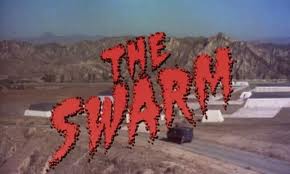 In the summertime, I like to grill outside. I'm not a gas griller. I use charcoal and an old Weber, so it takes me a few minutes to get things going, and I have time to sit on the deck and contemplate while my briquettes are burning. A couple summers ago while engaging in wistful contemplation, I noticed what I would call an unusual number of bees flying around my head and neck area -- all around the deck, actually. So I did some keen observation and saw, much to my alarm, that bees were coming and going from a small hole in the ground next to my well window. I didn't appreciate that. I have kids and didn't want them running into a stream of bees while they were minding their own business, rolling in the grass, or jumping up and down and yelling for no good reason (my son does this). So I went into the garage and got my can of Raid and sprayed the bee tunnel. Problem solved. Not so fast there, Steve. The next night I noticed what I would characterize as more bees. I got my can of Raid and emptied it into the hole. I'm not proud to admit I might have uttered "Die, bees! Die!" while I spritzed their honey hotel. The bees did not die. In fact, they seemed to flourish on vaporized poison. Fast forward two days. A very bee-y evening. Most of the little worker bees were out gathering nectar, or what have you, and Hurricane Steve decided to destroy their beetropolis. I stuck a garden hose into Bee Hollow and let her rip. I cooked some cheeseburgers and felt very satisfied with my twilight sneak attack. Then the bees came home from work. They were not happy. They saw a guy in a tank top with a spatula in his hand (me) and decided he was a big jerk. Now I can't say if it was a "swarm" that attacked me, but it was close. Yet I would not be deterred. I ran into my garage, put on my jean jacket, and grabbed a broomstick. I went back into the yard and in the "fog of war" I jammed my broomstick repeatedly and furiously into the beehole. Now all you Little Leaguers at home listen up. Never, never, never jam your broomstick into a beehole. During the course of my crazed butter-churning frenzy of mud, blood, and bees, I lost my sweaty grip on the broomstick and it vanished into the beehole. The ENTIRE broomstick. I got on my knees and peered into the darkness and saw nothing. But I heard them -- the angry angry bees. I was in over my head, I realized. And I ran screaming like a little girl with skinned knees back into the house. Later, I went to my computer and did some research. Turns out my bees weren't bees at all. They were yellowjackets, which are actually wasps. Huh. The science goes like this: yellowjackets don't build their underground nest in the same place two years in a row. You can kill them with powdered poison. If they were going to leave, I decided I wouldn't go to war with them. Which brings me to my point: The Swarm. It was a 1978 Irwin Allen disaster film about killer bees, starring Michael Caine and a cavalcade of stars (Richard Widmark! Fred MacMurray! Patty Duke!). Well, the film was a bomb. Michael Caine regards it as the worst movie he's ever been in. But I'm here to tell you different. The Swarm is a B-movie lover's delight (Richard Chamberlain! Olivia de Havilland! Henry Fonda! And, yes, Slim Pickens!). I remember this movie well because my parents wouldn't let me see it in the theater, so instead I read the novel it was based on, which was written by Arthur Herzog (he also wrote the best killer whale revenge movie of all time, Orca). Later I caught the TV-edited version. Now I hear rumors The Swarm might be remade. I say go for it. But might I suggest a title change? What about: The Yellowjackets in the Hole in the Ground?
Thursday, February 10, 2011
Cartomancy
 When I was writing The Mirror's Edge, I did a bit of research on tarot cards, including famous (or infamous) decks such as the Rider-Waite or Aleister Crowley's Thoth deck. Boy, there's a ton of reading out there if you want to get into the iconography and symbolism of tarot, a subject that's been plumbed by everyone from Carl Jung to Timothy Leary. My personal experience with tarot is limited (never had a reading, never wanted one), but the symbology fascinates me. My favorite card is probably the Fool. Typically the Fool is seen on a precipice, dancing on the edge, unafraid. He's the Jester, the "wild card." He's Heath Ledger's Joker. Reckless, creative, living in the moment, but also hedonistic, Dionysian, and unpredictable. He's the party animal. His number is zero. He's an idiot, a dunce, or he just may be the wisest man in the room. HR Giger's amazing and disturbing (would it be anything else?) tarot deck is now sadly out-of-print. He depicts the Fool getting a lap dance, wearing headphones, with a shotgun in his mouth. Beyond him lies the precipice. If you're looking for tarot-influenced fiction, Tim Powers' brilliant, genre-blending novel, Last Call, uses intricate tarot imagery to decode a world of crime, violence, occult magic, and high-stakes poker. As Cuba Gooding Jr's dad tried to tell us, "Everybody plays the fool sometimes . . ."
Wednesday, February 9, 2011
Used & Abused: Some Of Your Blood
 In my Used & Abused posts I shine a light on older books that made a difference in my reading/writing life, or books that have come out more recently but might've slipped under your radar. Now in a perfect world, I wouldn't have to introduce anyone to Theodore Sturgeon because his name would be as well known as JD Salinger or John Steinbeck. But we don't live in a perfect world. It might be better if more people read Sturgeon. He writes cleanly, economically. His prose is something to be admired -- like a well-built piece of furniture. He's a true craftsman, and it shows (mostly by not showing at all). This guy can squeeze your heart like no other. He has a keen eye for describing human cruelty and the inner workings of the outsider. But the best thing about Sturgeon is his uncanny ability to get the reader to empathize. We could use more empathy (and less reality TV). If you don't know Sturgeon, fear not. His works are brisk and, on the surface, quite simple. He's probably better known for his short stories and his science fiction novels (More Than Human, The Dreaming Jewels, Venus Plus X). But I'd like to recommend his sort-of-horror novel, Some Of Your Blood, which is an examination of psychopathology and, perhaps, vampirism. The form of the novel is a case study, a group of letters from the file of a soldier in a military psychiatric hospital. By reading the file, you become yet another forensic investigator perusing the shocking evidence of AKA George Smith's actions. This book sneaks up on you, and it lingers in the mind. I like that. Hell, you can't miss with Sturgeon. After all, he wrote the story "Killdozer!".
Tuesday, February 8, 2011
Those Weren't Indians
 In my last post I mentioned JT Petty. He wrote and directed one of the best Weird Westerns I've seen: The Burrowers. It's a Lovecraftian mix of downright nasty, underground-dwelling, killer creatures and a good old-fashioned "find the girl" Western plot. The film looks authentic and takes its task seriously (which I admire, and which is sorely lacking in most of today's horror films). If you don't take your movie seriously, how am I supposed to? Call me crazy, but I go to a horror movie hoping to get scared, shocked, or disgusted. And The Burrowers does all three. The acting is solid all around. The story actually has structure and isn't a strung together series of prepackaged one-liners, dizzying camera shots, and overblown special effects (Jonah Hex, you hear me?). The ending lacks a little oomph. But I enjoyed the ride getting there. Tell your Ma to fire up some Jiffy Pop, because it's a good'un.
Monday, February 7, 2011
Beyond The Pale
 Not too long ago I was driving in the middle of the night through the back highways of Wisconsin, when I caught an old-time radio drama called Escape. William Conrad of Nero Wolfe and Jake and the Fat Man fame (he'll always be Cannon to me), did a great performance of Leiningen Versus the Ants. Well, one of my favorite movie directors, Larry Fessenden, has a great new collection of "Radio Plays for the Digital Age" over at Tales From Beyond the Pale. Fessenden is the man behind such indie horror flicks as Habit, Wendigo, and The Last Winter. These original macabre stories come from the talented pens of Sarah Langan, JT Petty, Paul Solet, and Fessenden himself, among others. The recordings are high quality and tons of fun, and the actors are no slouches either (Ron Perlman, Vincent D'Onofrio, Doug Jones . . .). At $1.99 an episode, how can you wrong? Get the creeps right in your ears!
People Are Strange
 You and I both know how weird things are. So let's calm down and sort through the weirdness together, okay? Do you like books and movies? Hey, me too! What I really dig are stories in all formats that make me reassess my view of reality, or just plain scare me till I go sideways and crab-walk out of the room. Words are important. So are images. Life is a great big plate of huevos rancheros after a night of too much whiskey and beer. So loosen your belt, put your mirror shades on, and let's take a trip to the darkside, flipside, dirty underside, and see what we shall see.
Subscribe to:
Posts (Atom)